This is probably the first philosophy book I have picked up, and it is an incredibly dense one. Nietzsche introduces several radical ideas, including the concept of eternal recurrence. While it is not the easiest text to navigate, and there are still chapters I struggle to fully comprehend, certain profound points continue to linger. In a way, Thus Spoke Zarathustra feels like a raw version of a 19th century self-help book.
Nietzsche stresses the importance of growth and strength, viewing suffering and tension as the necessary catalysts to achieve something greater. He argues that growing constantly requires tearing down the old self to forge a stronger one. It heavily reminds me of the Tower card in Tarot reading: the card of sudden destruction, but ultimately, of liberation.
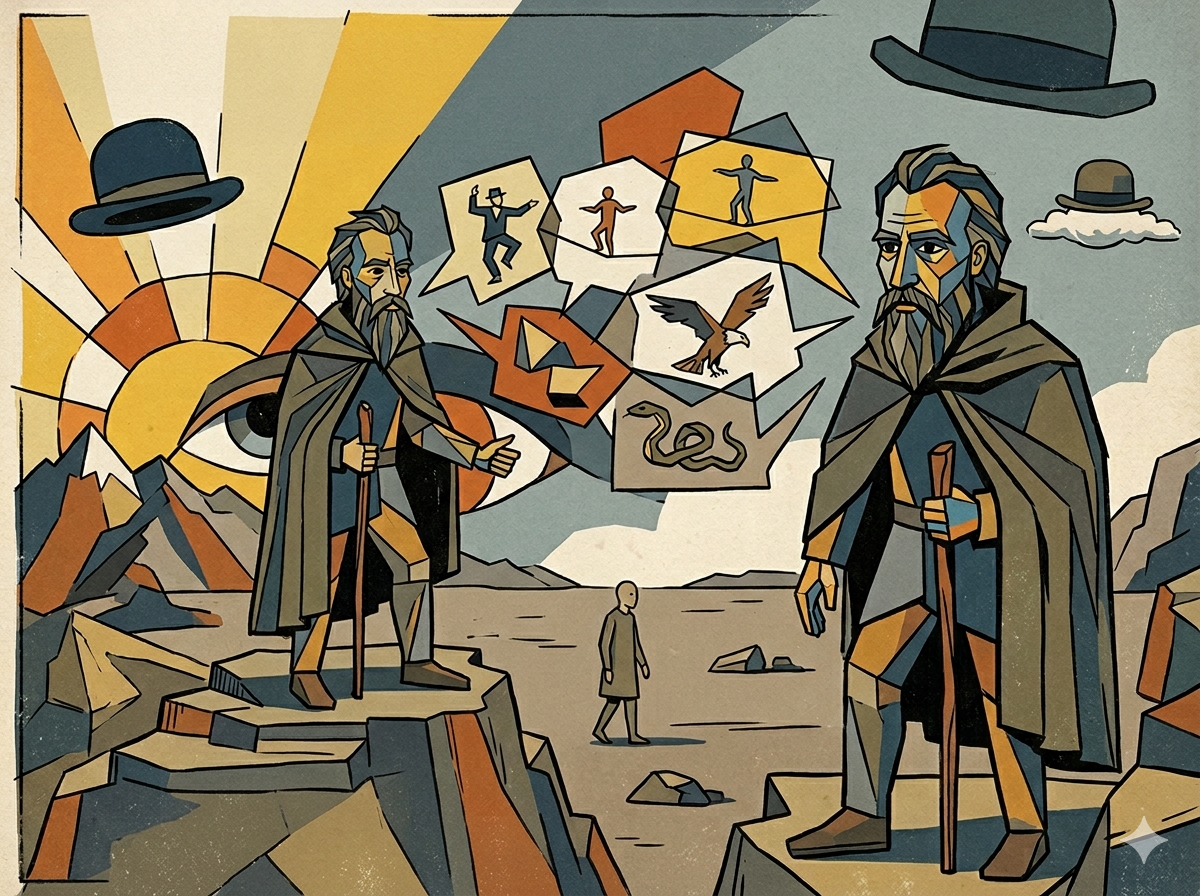
The Will to Power
Throughout his writing, Nietzsche conveys a dramatic shift in how we should conceptualize morality. He argues that human values do not need to stem solely from religious dogmas; instead, we should focus on encouraging value creation from within ourselves.
Crucially, the will to power is not about a desire to conquer others or achieve dominance as a competitive act. Instead, it emphasizes self-mastery, personal growth, and relentless self-overcoming. This journey requires us to reject the comfortable conformity of the herd mentality, urging us to create our own life-affirming values rather than blindly inheriting them from society. It is an evergreen way of living that most of us tend to forget: to find our own "value tree" and live according to the weights we place on its branches.
Essentially, because the will to power is an internal journey toward self-mastery, it naturally follows that all of us will develop a unique table of values. We cannot expect others to hold the exact same values as us, and it is entirely alright if they do not. Rather than forcing conformity, Nietzsche points us toward the Übermensch, a figure akin to a Heideggerian authentic self. We are entirely capable of creating meanings that may not have existed before, but we must determine for ourselves our own way of living.
Think of a time when we were all fixated on a mentality deeply rooted in society that wasn't necessarily true. We are often taught that the definition of success means following a singular, predetermined path, so much so that we routinely suppress our genuine desires to pursue our true interests. Of course, it is true that conforming to traditional routes often yields a higher chance of a "comfortable" life, but what defines comfort is deeply subjective. Society dictates that comfort means securing the essentials like housing, healthcare, and the occasional material splurge. Yet, true wealth goes far beyond a high salary or a massive bank account.
Ultimately, real success boils down to choices. True wealth is not about accumulating lots of money, but about securing the freedom to do what we want, when we want, and to be entirely present wherever we are. The "better route" isn't the one that promises the most luxury, but the one that yields the most options. It grants us the autonomy to choose which path we want to sail toward, transforming us from passive passengers of social expectations into active creators of our own destiny.
Many of us, in our younger days, questioned the very purpose of our education. We asked ourselves why we were forced to study subjects that felt entirely unrelated to our true passions, whether in the arts or other unconventional fields. While school undoubtedly trains us how to think, perhaps the most honest answer to that youthful question is that education buys us leverage. It isn't just about a degree; it is about expanding our arena of choices, granting us the ultimate freedom to decide exactly where we want to be, and the freedom to pursue another route if we want to.
The Übermensch as the Ultimate Driver
The Übermensch is the supreme embodiment of the will to power. Think of the will as the fuel, and the Übermensch as the driver pushing toward the absolute peak of human potential. Without this internal driving force, one risks falling into a moral vacuum, eventually becoming trapped in the paralyzing jaws of nihilism. As Nietzsche famously notes in his prologue:
“Was groß ist am Menschen, das ist, dass er eine Brücke ist und kein Zweck ist.”
(What is great in man is that he is a bridge and not a goal.)
Finding our value tree is a lifelong, turbulent process. It will constantly evolve, and we may never fully reach the absolute peak of the Übermensch. But as long as we refuse to blindly inherit the values of the herd, we are actively moving across that bridge.
If we reject inherited tables of value, we are left with a difficult question: from what soil does this tree grow?
Nietzsche points to the body, to instinct, to the "self" that is wiser than the conscious mind.
But in practice, I think we discover our values not through pure introspection, but through experimentation. We take a path and we pay attention to whether it expands us or contracts us. The branches that bear weight are the ones that survive repeated seasons. This is not a single moment of heroic self-creation; it is a slow, iterative process. The Übermensch may be the destination, but the daily act of pruning and grafting is the real work.
Eternal Recurrence: The Ultimate Cosmic Test
This continuous act of self creation brings us to Nietzsche's ultimate cosmic test: Eternal Recurrence. It challenges us to deeply reflect on the life we are leading and ask ourselves if we would be willing to live this exact existence over and over again for eternity. This means reliving every single pain, every fleeting joy, and every moment of profound suffering.
To live as the Übermensch means to construct a life so authentically ours, and so filled with self mastery, that we would look at this eternal loop not as a curse, but as a choice we would eagerly make for eternity.
Amor Fati: The Love of Fate
To pass the test of eternal recurrence, one has to encompass Amor Fati—the love of one's fate. It is not about being stoic or merely tolerating our struggles, nor is it about passively accepting our past missteps. Instead, Nietzsche reminds us that every single moment of confusion, tension, and structural collapse was a necessary catalyst for our growth. It demands not just self creation, but radical honesty.
Just like the sudden destruction of the Tower card in Tarot, the painful chapters were not a detour from our true path, they were the path we needed to take to get to where we are. Every choice we made and every person we met were essential to writing our pages, shaping who we are today.